
Frozen condensate pipe: the one boiler fault you can fix yourself
- Checked September 2026
- 3 min read
- By PROS AI editorial team
Quick answer
The short version, before the detail.
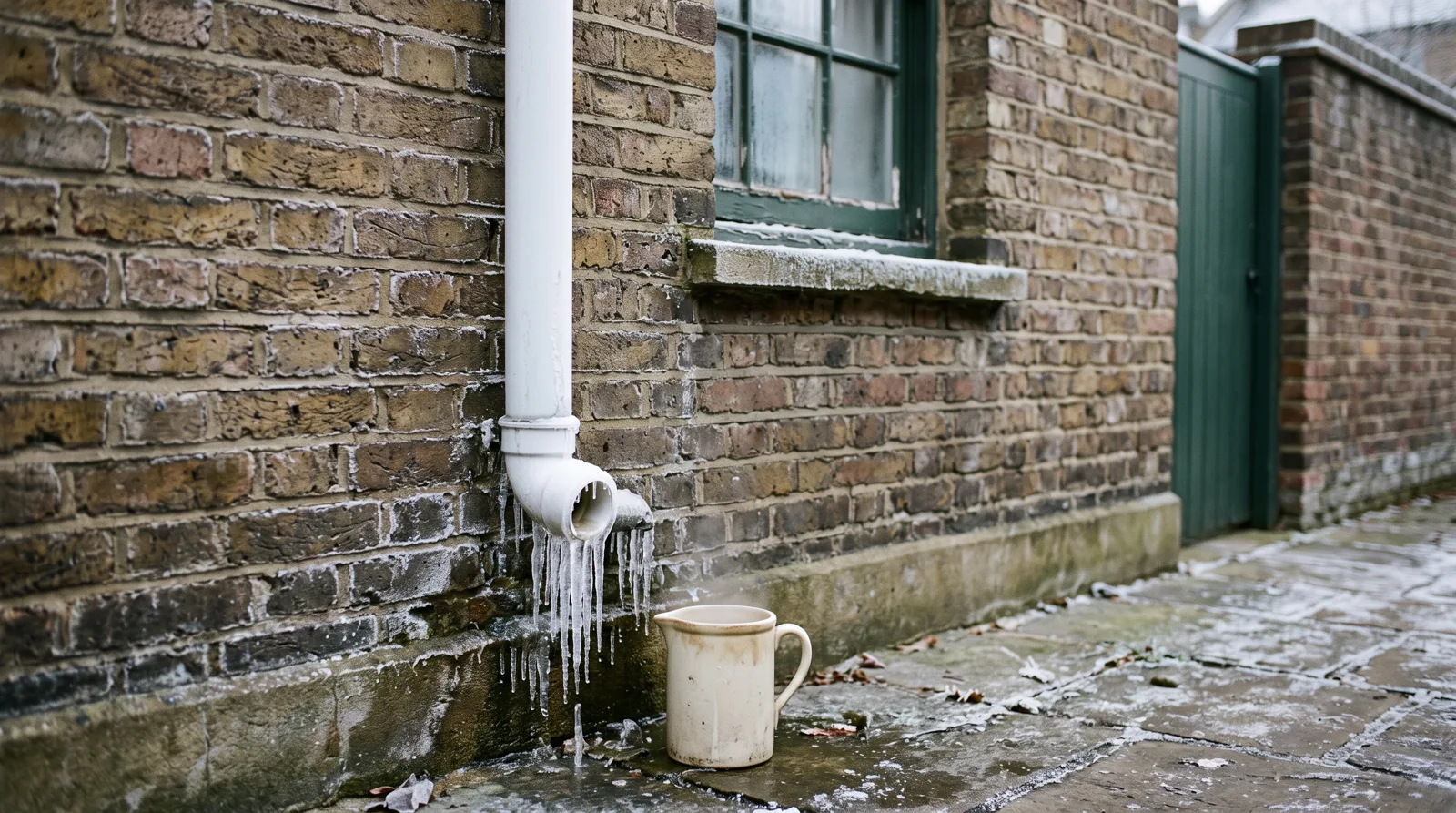
In a freeze, the white plastic pipe that drains water from a condensing boiler can ice up where it runs outside. The boiler senses the blockage and shuts down, often with a gurgling noise first. Thawing the pipe with warm, not boiling, water and pressing reset once usually restarts it within minutes. It is the one boiler fault a homeowner is expected to fix.
What is the likely cause?
The fault is always the same, ice, but where it forms decides how easy the fix is. Most common first.
Ice at the open end of the pipe outside.
How to tell: the pipe ends in the open air or over a drain, the temperature has been below freezing overnight, and the boiler gurgles and stops.
Ice at a bend, a dip or a long horizontal run outside.
How to tell: the pipe runs some distance along the wall before it reaches a drain, so water sits in it and freezes.
A blocked drain rather than ice.
How to tell: the gully the pipe feeds is full of leaves or moss, and the fault can appear in mild weather too.
Ice inside an unheated garage or loft.
How to tell: the pipe leaves the boiler and runs through an unheated space before it reaches the drain.
A pipe fitted without enough fall or insulation.
How to tell: it freezes every cold snap. That is not a thawing job but a re-routing job for an engineer.
What can I safely check myself?
This fix is done entirely from outside the boiler. Nothing here opens the casing, cuts or disconnects the pipe, or touches gas or wiring.
- Find the pipe. It is a white or grey plastic pipe, thinner than a drainpipe, that leaves the bottom of the boiler, goes through the wall and ends at a drain or gully outside.
- Only from the ground. If the frozen section is above head height or only reachable from a ladder, stop and call an engineer. The ice is not worth a fall, and water you pour can freeze on the path and make it slippery.
- Warm it. Hold a hot water bottle, a microwaveable heat pack or a cloth soaked in hot water against the frozen section, starting at the open end and any bend or dip. Or pour warm water along the pipe from a jug or watering can. Never use boiling water from the kettle; it can crack the pipe.
- Reset once. Back inside, press the boiler's reset button for a few seconds and wait two to three minutes for it to restart. Some boilers need a second attempt.
- Clear the drain. While you are outside, lift leaves and moss off the gully the pipe empties into.
- Afterwards. Refit any insulation you moved. Manufacturers advise lagging the outside run with waterproof foam insulation and fitting a cover on the pipe end, and keeping the heating running in a freeze rather than switching it off. Ask about that at the next service.
When do I stop and call an engineer?
- If you smell gas, leave the property, do not switch anything on or off, and call the National Gas emergency line on 0800 111 999 from outside.
- If water from the thawing is running near an outside socket or light, or the boiler's fused spur, switch off at the main switch only if it is dry and safe to reach.
- Stop if the boiler does not restart after the pipe has thawed and one reset, if the pipe cannot be reached from the ground, or if it freezes again within days. A pipe that freezes repeatedly needs insulating or re-routing, which the engineer can do at a service visit.
- Anything behind the casing is gas work for a Gas Safe registered engineer. Check the seven-digit number on their ID card at gassaferegister.co.uk, or text Gas and the number to 85080.
What does it cost in London?
A frozen condensate pipe is the boiler fault most worth two minutes before you call anyone. If you do call, an emergency engineer in London is £140 to £260 for the first hour outside working hours and £110 to £160 an hour after that, against £60 to £125 for a daytime visit. Re-routing or lagging the pipe on a planned visit is charged at £80 to £140 an hour.