
Burst or leaking pipe: the first 10 minutes (stop the water, protect the electrics)
- Checked September 2026
- 5 min read
- By PROS AI editorial team
Quick answer
The short version, before the detail.
Turn the stopcock clockwise until it stops, switch the boiler and heating off, then open the cold taps to drain the pipes. If water is near sockets, lights or the consumer unit, switch off at the main switch, but only if it is dry and safe to reach. That order, done in the first ten minutes, is the difference between a wet floor and a ceiling down. Then call a plumber; the pipe itself is not a homeowner repair.
What is the likely cause?
Most common first, with how to tell. In the first ten minutes the cause matters less than the stopcock, but it tells you which pipe to isolate and what to say when you call.
A frozen pipe that has split and is now thawing.
How to tell: a cold snap, a pipe in a loft, garage or outside wall, and water that started as the weather warmed. WaterSafe's winter warnings put this at the top of the list.
A failed joint or fitting.
How to tell: water at a compression nut, a push-fit connector, a radiator valve or a tap connector rather than along the pipe; they weep before they let go.
An appliance hose or valve.
How to tell: water under or behind the washing machine or dishwasher, usually when it is filling. The small valve on the wall behind it isolates that hose on its own.
A pinhole in copper or a nail through a pipe.
How to tell: a fine spray or a damp patch that appears after building work, carpet fitting or a new floor.
The heating system rather than the mains.
How to tell: the boiler pressure gauge has dropped, or water is coming from a radiator or from the copper pipe that leaves the boiler through the outside wall. The stopcock does not stop heating water; switching the boiler off and letting it cool does. See boiler losing pressure.
A tank in the loft overflowing.
How to tell: water from the small overflow pipe outside, or through the ceiling under the loft, and a ball valve that has stuck. Closing the stopcock stops the tank filling.
What can I safely check myself?
This is the ten-minute list, in order. Nothing here cuts, tightens or repairs a pipe; that is the plumber's part.
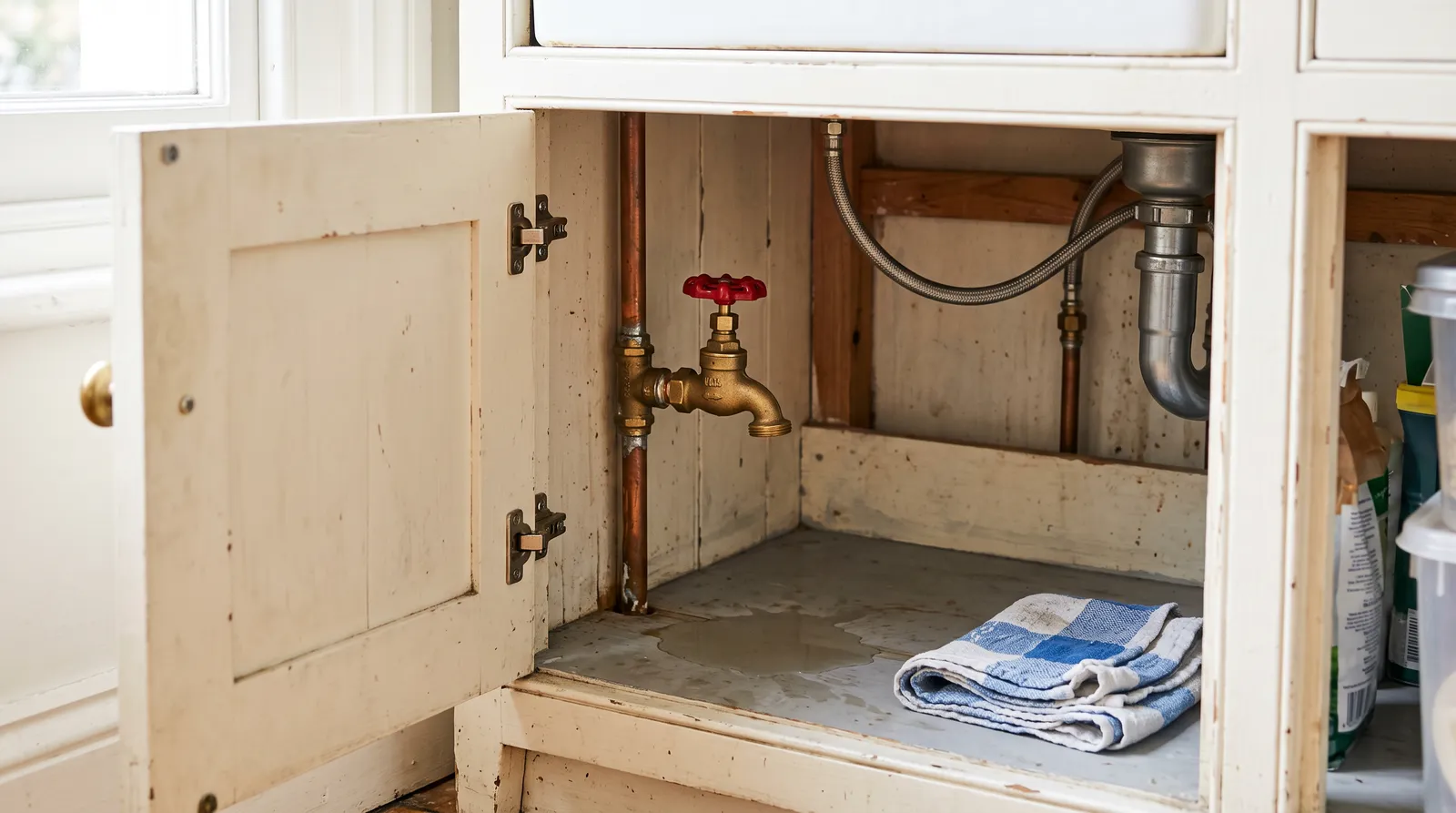
- Stopcock, clockwise. It is usually under the kitchen sink, otherwise in a cupboard, the garage, the cellar or under the stairs. Turn it clockwise until it stops, slowly, and never force it. If you cannot find it or it will not turn, say so when you call.
- Boiler and heating off. WaterSafe and Thames Water both put this second, to stop the heating pump pushing water round and to protect the boiler if it is a heating leak. Switch the boiler off at its own switch, not the consumer unit, unless the electrics are wet.
- Open the taps. Open all the hot and cold taps to drain the pipes and drop the pressure; the leak slows within a minute or two. Flush the toilets too.
- Electrics. If water is running near sockets, a light fitting or the consumer unit, switch off at the main switch on the consumer unit, but only if it is dry and safe to reach. Electrical Safety First's words are "if it is safe to do so", and its warning is that water and electricity are a lethal combination. If the unit itself is wet, do not touch it.
- Contain. Buckets under the drip, towels along the edge of the water, furniture and anything electrical lifted or moved away. If the ceiling is bulging, keep everyone out of that room until the plumber arrives.
- Photograph and note. Where the water is coming from, the time, and what you have switched off. WaterSafe's advice is to keep records of the damage and the repairs for the insurer.
- If the stopcock has not stopped it, the leak is on the mains side of it or the stopcock has failed. Do not dig for the outside stop valve: it belongs to the water supplier, and WaterSafe says you may need its permission to operate it even in an emergency. Call Thames Water and tell them the inside stopcock has not worked.
When do I stop and call a plumber?
- If water has reached the boiler or a gas appliance and you smell gas, leave the property, do not switch anything on or off, and call the National Gas emergency line on 0800 111 999 from outside. The boiler and anything behind its casing are work for a Gas Safe registered engineer.
- Water in or near the consumer unit, a socket or a light fitting: main switch off only if it is dry and safe to reach; otherwise keep away from it and tell the electrician as well as the plumber. Nothing that got wet goes back on until an electrician has checked it.
- Stop at the stopcock. WaterSafe's own list ends with "contact a WaterSafe Register recognised plumber for a permanent and safe repair"; a homeowner tightening a joint on a live pipe usually makes it worse. Stop too if the stopcock will not turn, if the water is coming through a ceiling, or if it keeps coming with the stopcock closed.
- The supply pipe from the boundary into the house is yours to repair, and Thames Water expects a leak on it fixed within four weeks, after which metered customers may claim for the lost water. Thames Water repairs its own mains and the communication pipe up to your boundary.
What does it cost in London?
An emergency plumber in London is £86 to £140 for the first hour in the day, £113 to £131 in the evening or at the weekend, and £90 to £220 at night, with a one-hour minimum. The repair itself is £120 to £200 for a pipe you can see and £180 to £300 or more for one behind a wall or under a floor; the parts are £2 to £30, so you are paying for access and urgency. If the leak has to be found first, a basic survey is £150 to £300 and a same-day emergency trace £350 to £550. Most home insurance includes trace and access cover, typically about £5,000, and a leak the stopcock has contained is cheaper fixed the next morning.