
Leak under the kitchen sink: find where it is coming from and stop it
- Checked October 2026
- 5 min read
- By PROS AI editorial team
Quick answer
The short version, before the detail.
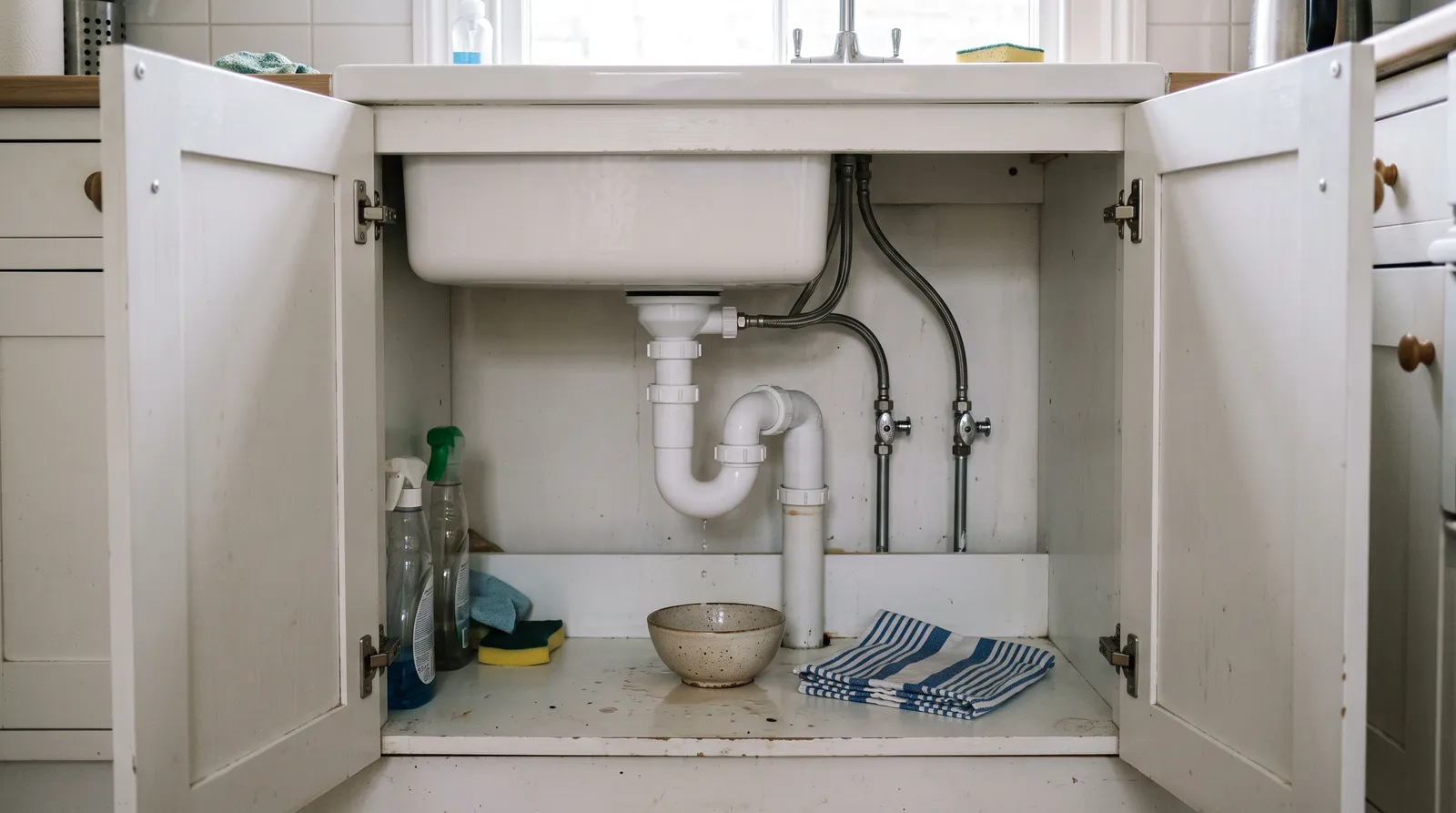
Dry every pipe and joint under the sink with kitchen roll, then watch when the drip comes back: with nothing running it is the supply side, only while the tap runs it is the tap, only while the sink drains it is the waste, and only while a machine runs it is that machine's hose. Close the small valve on a leaking supply pipe, or the stop tap, which is often in the same cupboard. If water has reached a socket or plug, switch off at the main switch first, but only if the consumer unit is dry and safe to reach. Pipes and fittings inside your home are yours to fix, so this is a plumber, not Thames Water.
What is the likely cause?
Most common first, with how to tell.
The waste trap or waste pipe.
How to tell: everything is dry until the sink drains, then water appears at the plastic trap under the plughole or at a joint after it. Usually a loose nut, a perished washer or a trap half blocked with fat; Thames Water warns that fats, oils and grease harden in pipes and cause blockages.
The tap connectors and supply pipes.
How to tell: a steady drip at a nut or a flexible hose with nothing running, because these pipes are under mains pressure all the time, usually at an isolation valve or where a flexible hose meets the copper pipe.
The tap itself.
How to tell: water runs down the tap's own pipes or appears on top of the cupboard only while the tap is on, or the tap moves on the worktop. WaterSafe's fix for a loose tap is to tighten its nut with the water off.
The dishwasher or washing machine.
How to tell: water appears only while the machine fills or empties, at the valve on its fill hose or where its drain hose joins the sink waste.
The stop tap.
How to tell: water around its joints or rising from the spindle. WaterSafe says it is often under the kitchen sink; water at the joints usually means loose or worn nuts and seals, water at the spindle points to the gland nut.
The sink seal or the overflow.
How to tell: water only when the bowl is full, from around the sink edge or the overflow pipe.
What can I safely check myself?
Nothing here involves cutting, bending or replacing a pipe; that is the plumber's part.
- Electrics first. If water has reached a socket, plug or cable, do not touch it; switch off at the main switch only if the consumer unit is dry and safe to reach. Use the appliance switch above the worktop if there is one, as Electrical Safety First recommends, and never with wet hands.
- Contain it. Empty the cupboard, put a bowl or tray under the drip and towels round it, and take photos for the plumber and the insurer.
- Find it. Dry every joint, then test in order: nothing running, the tap on, the sink filled and drained, then a machine cycle. The first joint that wets a dry sheet of kitchen roll is the leak.
- Isolate a supply leak. Turn the small valve on that pipe a quarter turn with a flat screwdriver, so the slot sits across the pipe. If there is no valve or it will not move, turn the stop tap clockwise. WaterSafe's rule is to turn it slowly and never force it. Then open the cold kitchen tap, not the hot, as WaterSafe advises, to drain the pipe. Once it is fixed, open the valve fully again; if the tap is still slow, see no water or low pressure.
- Deal with a waste leak. Stop using the sink and any machine that drains into it. Hand-tightening the plastic nuts on the trap often stops a drip. Scrape fat into the bin, never down the sink.
- A weeping stop tap. WaterSafe says a weeping nut can be tightened gently a quarter turn while you hold the tap body steady. If it still weeps, or the valve is stiff or corroded, stop there.
When do I stop and call a plumber?
- Water on a socket, plug, cable or the consumer unit: main switch off only if it is dry and safe to reach; otherwise keep away from it. Electrical Safety First says wet appliances stay off until a registered electrician has tested them.
- Stop once the water is off. Call a plumber for a supply leak the valve does not stop, a cracked fitting, a leak on a copper pipe, or a valve that is seized. WaterSafe's own list of when not to DIY includes forcing seized parts and working on fragile or corroded pipework.
- If the leak keeps coming with the stop tap closed, WaterSafe notes some homes have a second stop valve in the loft or airing cupboard. If the stop tap will not close, or the leak is on its incoming side, call a plumber and Thames Water: WaterSafe says the outside stop tap belongs to the water supplier and you may need its permission to use it, even in an emergency. If water is pouring or a pipe has split, follow burst pipe: the first 10 minutes.
- Use a plumber on the WaterSafe register; they are trained in the Water Fittings Regulations.
What does it cost in London?
A plumber in London charges £86 to £140 for the first hour on a weekday and £113 to £131 for an evening or weekend first hour, then £55 to £95 an hour. A weeping joint is often done within the first hour, and a small leak on an exposed pipe or joint is £120 to £200. A blocked kitchen sink cleared from inside is £50 to £90. If the tap is the problem, fitting one you supply is £75 to £150 in labour and £80 to £300 supplied and fitted; a new cartridge is a £5 to £30 part and 30 to 60 minutes. A leak that has got into the wall or under the floor is £180 to £300 or more.